
Geoenergy research funding to drive change for a low carbon future
Posted on 12 May 2026
Backed by a significant investment from industry, a new research project led by Durham University will support the UK’s energy transition and drive innovation in low-carbon technologies.
The geoenergy research partnership will unite geoscientists, engineers, and social scientists from predominantly northern universities to advance geoenergy research.
Participating institutions include Durham, Liverpool, Manchester and Newcastle universities, all members of the N8 university research partnership and Royal Holloway, University of London.
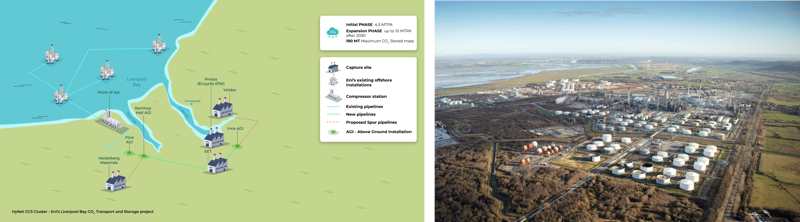
With major funding support from Eni S.p.A., a global energy tech company and operator of the CO2 transportation and storage infrastructures for the HyNet North-West Cluster, this research partnership will leverage global expertise to support HyNet’s objective to decarbonise the North-West of England and North Wales.
The research collaboration aims to provide the means to reduce regional CO2 emissions by capturing, safely and permanently storing CO2 from difficult to decarbonise heavy industry.
Professor Stuart Jones, from Durham University’s Department of Earth Science and Co-director of Durham Energy Institute, is leading the project. He said: “Working with our partners and collaborators, this ambitious research programme is focused on the North-West of England, North Wales, and the East Irish Sea Basin.
“This region hosts significant geological resources that can be used to facilitate the energy transition in the UK, underpin regional and national energy security, and provide a sustainable energy future for the area, when combined with renewable energy resources such as wind and solar.
“The geological resources available include geothermal energy, net-zero carbon high-calorific natural gas, storage options for CO2, hydrogen, compressed air, geothermal heat, and high-level nuclear waste, as well as the real possibility of commercialising what others consider waste.
“By integrating surface and subsurface energy processes and reusing associated by-products, we hope to create a low environmental impact energy future and an energy system that acts as a model for elsewhere in the UK, Europe, and beyond.”
As part of the programme, up to 14 PhD studentships and several postdoctoral research positions will be created over the next three and a half years.
Durham Energy Institute’s Multidisciplinary Centre for Postgraduate Training in Energy will provide a bespoke training programme for the PhD students, enabling them to explore energy from multiple perspectives and gain a broader understanding of energy issues.
The research project will explore cutting-edge subsurface technologies - including carbon capture and storage, hydrogen storage, CO₂ plume geothermal, and deep geothermal - with a focus on earth science and engineering. A dedicated PhD researcher at Durham will also examine the social and economic implications of these innovations.
Professor Jon Gluyas, Chair of Geoenergy and Carbon Capture and Storage at Durham University said: “This project brings together the best in academia and industry to create opportunities for UK energy security, sustainability and affordability - new energy industries delivering jobs, growth and social inclusion."
Eni’s support will allow the consortium of leading UK universities to assess the geo-energy resources of North-West England, North Wales, and the East Irish Sea Basin, and develop plans for a sustainable, low-carbon geo-energy sector.